Theatre: An RPG (Quickplay Rules)

This game is intended for players experienced with roleplaying. For beginners, we recommend Countdown: A Game for Two Players, by the same developers.

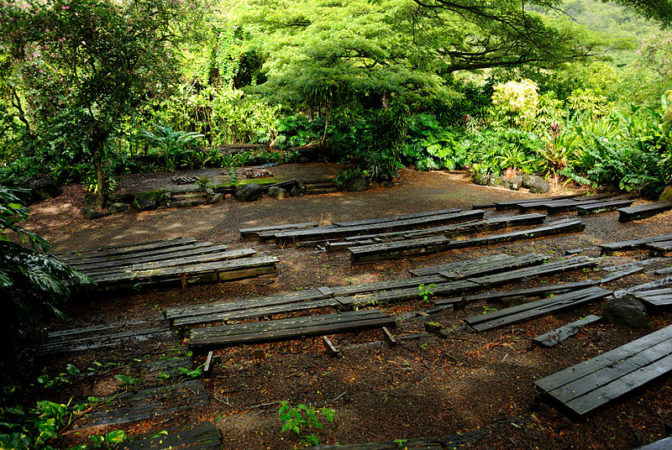
An abandoned theatre in the woods, rotting and overgrown with plants
Image by Daniel Ramirez (CCBY 2.0)

Theatre is a live-action roleplaying game for any number of players, limited only by your available space and resources. Together, as in most roleplaying games, you’ll enact a story. One difference in this game is that you aren’t in control of all the events in the story: they proceed in the sequence established by the adventure you’re playing. What you can control is how those events are explored: what mood do they establish? What events are especially significant, and how do the characters actually feel as they go through the sequence?

You’ll typically play this game with a pregenerated adventure, which establishes the nature of the characters and the moves they’ll make during a play session. Advanced players can play the game improvisationally, with certain players essentially making up the characters and moves as they go; guidelines for this mode of play are available in additional supplements. A sample pregenerated adventure is included at the end of this document, but a wide array of free and paid adventures are available from third-party creators and publishers.

For small groups, a home setting is perfectly appropriate. If you intend to play with a particularly large group (more than ten, perhaps), you will need an appropriate venue with sufficient seating where everyone can see the roleplay area. Consider a place where musical performances are held, perhaps a park bandstand; these usually have an raised, visible area for roleplay and enough seating to support a large number of House players.

Regardless of your setting, you should establish a space for roleplay that is visible to all participants, with enough space to move around. Try to establish a space that people can access from all sides, and make sure to have options for private areas to which people can withdraw if they’re not actively involved in play.

Player Roles

In Theatre, the players are divided into three groups: the Troupe, the Crew, and the House. You can play with as few as two players; try to have at least one Troupe player and at least one House member, but the system is otherwise very flexible.

While there is no maximum number of players supported by the system, we recommend limiting the number of Troupe and Crew players to around ten each unless your group is particularly experienced. House roles are especially appropriate for beginners, as they need not be familiar with the rules or the adventure being played.

The Troupe control player characters; for beginners, you should probably assign one PC per Troupe player, but as you become more comfortable in play you may wish to assign multiple characters to a single player, as is most feasible. We recommend against playing multiple characters that interact in the same Scene of an adventure. Each character in an adventure should have a Troupe player controlling them.

The Crew are responsible for facilitating the play of the Troupe and for setting mood and other aesthetic aspects of the game session. They are, essentially, controlling all elements of the setting of the adventure. The basics of the Crew’s responsibility will typically be described in the adventure module, but it is a rather flexible and rules-light role, similar to that of a Game Master in a more typical roleplaying game.

The final group of players, the House, can be of any size. While you can participate in a game session without any House players, the presence of the House is important and rewarding if you seek a full game experience. The House observes the rest of play, and takes moves collectively or individually to guide the mood of play and, in extreme cases, call it to a premature end.

Some advanced adventure modules may blur the lines between these play groups. For example, the actions of the Crew may reflect certain characters within the story of an adventure, or the characters played by the Troupe may interact with House players as if the House players are themselves player characters.

Flow of Play

Use the sequence of your selected pregenerated adventure to determine how play proceeds. While you can certainly play through an adventure that is unfamiliar to you, we recommend that the Crew and Troupe review the adventure module beforehand to guide their roleplaying. If you find it inconvenient as a Troupe player to consult the adventure during play, you can even memorize the moves available to your character.

Once you are ready, the House players will observe the gameplay as the Troupe players roleplay the moves of their characters in the sequence dictated by the adventure module. The Crew players facilitate this roleplay with their particular planned (or improvised!) support.

During play, Troupe players will typically roleplay behavior described in italics and read suggested dialogue labeled with their character’s name. As you become more comfortable with the rules of the game, you should feel free to stray from the exact actions or dialogue dictated by an adventure, but make sure to do so in such a way that it does not interfere with the play of other Troupe and Crew players. You may wish to discuss any major changes with Troupe and Crew members before the game session.

During play, Crew players will typically stay out of the main roleplay area, adjusting elements of the play space from afar and only making direct changes in the roleplay space between Scenes. Crew play may include changing the decorations of your play venue to match the setting of each scene; finding and preparing props or cosplay to add verisimilitude to the Troupe’s roleplay; or controlling appropriate music, sounds, and lighting for the session. You may find it useful to appoint one member of the Crew to a supervisory role, making overarching decisions about Crew activities and making sure the Crew and Troupe play together smoothly.

During play, House players will closely observe play and provide feedback over the course of a game session. The Crew and Troupe should keep in mind the opinion the House players are communicating and let it shape their play as long as it does not distract from roleplaying as the adventure dictates. For beginning House players, we recommend that they offer simple critique between Scenes by cheering or jeering, but as you become more comfortable with your play group, you may enjoy encouraging the House to offer detailed commentary, either during a Scene or afterward in a post-session review.

Sample Adventure Module

Included as an appendix to this ruleset is the adventure module The Tragedy of Macbeth. For convenience, the full adventure text is available in HTML format on an external site. Get the adventure module here.

Variants of Play

There are several variants of play, appropriate for players who, for logistical reasons, cannot play the default version of Theatre. These include:

  • Timeshifted Play: The Crew and Troupe players proceed as normal, without any House players present. However, record the play session using audio and/or video recording. You may wish to have a Crew player edit this recording to remove any table talk or rules mistakes for a smoother experience. Later, the House players can observe the recording and provide their feedback in whichever way seems appropriate. This approach can make a play session accessible to a large number of House players, as they need not all watch the recording at the same time.
  • Solo Play: You can play through an adventure solo, taking on all the player roles yourself. Think of yourself as a House player first and read through the adventure. Imagine the play of the Troupe and Crew as you proceed: you may read the moves aloud if you wish, but this is not necessary. While any adventure may be played this way, there are adventures available that are intended for solo play, with additional detail to the Crew moves and a complexity of story that would be too complicated for group play.
  • Competitive Play: To make this a competitive game, form multiple teams of Troupe and Crew players, with each team engaging in a play session. Each session will use the same House players, regardless of team. Each Troupe/Crew team will play through a different adventure, and the House players will determine which team did a better job. You may award a prize such as a commemorative statuette when the competition is complete.

Welcome to Theatre

Thank you for trying out these quickplay rules for Theatre! While there are many more details in the full version, including a guide to writing your own adventures, we hope that in playing with these rules you have a good idea of how the game is played. We welcome any feedback you may have on how your play went!

If you want a more conventional tabletop game, check out my game about making friends and protecting your home, Fusion Time.

Fusion Time Released!

I’ve put out a new game! It’s a GM-less tabletop roleplaying game where the players are a team of people with special powers defending their home. When their interpersonal clashes grow strong enough, an opponent attacks, and the players will have to Fuse in order to fight back and protect their home.

I’m calling this a “playtest” version, a sort of early-access thing. It’s fully playable but I haven’t done pretty formatting or figured out illustrations or anything. I’d like to see if I’ve missed any issues and if anyone’s even interested in the game at all before I do work to lay out the book in detail.

There’s more on mechanics and acknowledgments on the game’s store page, so check it out! There are even free community copies there for queer folks and/or people of color who don’t feel able to afford the game. Additionally, if you’re in media (including being a streamer) and want a review copy, or would like me to facilitate a game session for you, let me know!

Check out Fusion Time!

You may have noticed that I’ve released several tabletop things lately and relatively few video games. One of the main reasons for this is that it’s simply less work: both media need design and testing, but I find it quicker and easier to write up and format a rules document than to code up and create material for a video game. That said, I’m still working on stuff over at Future Proof Games, and you can keep an eye on this space for more.

Oh! And for more on my thoughts around the concept of fusion in media, check out my post on one of the game’s major influences, Steven Universe: “Everyone Should Watch ‘Alone Together’“.

Tabletop Garden: The Great Molasses Flood

Over at Tabletop Garden, we’ve just started airing a new campaign! It’s called “The Great Molasses Flood”, it uses the Rosette Diceless system I helped design at Future Proof Games, and it’s a great place to start listening if you haven’t yet checked out my actual-play podcast of short campaigns about interesting characters with a critical agenda.

“The Great Molasses Flood” is a weird-fiction story where we take a real historical disaster that was entangled with issues of class and ethnicity and examine it through the lens of strange sci-fi. I really like how it turned out! “Ego Driver”, the previous campaign, was a lot of fun and explored some cool stuff, but I really like “Flood”‘s more personal feel and the way that things go off the rails in the second half.

Check it out! If you like it, I would very much appreciate support on my Patreon account. You’ll get new episodes a week in advance and also get access to behind-the-scenes material; I did an hour-long postmortem on “Ego Driver” that went deep on my intentions and reflections on the campaign, and I plan to do the same for this one.

I hope you enjoy “The Great Molasses Flood”!

Warframe Has the Best Worldbuilding In Video Games

(This article contains a discussion of the storyline of Warframe. It contains many things that some people may consider spoilers. Trust me. Read it.)

Warframe is a free-to-play online third-person sci-fi shooter by Ontario developer Digital Extremes where you control a cool, acrobatic robo-warrior in a grindy co-op game where the PR tagline is “ninjas play free”. You fight space nazis, mechanized capitalists, and a bioplague in a handful of standard mission types to get loot and level up your gear.

Warframe, written and designed by Creative Director Steve Sinclair, Lead Writer Cam Rogers, and a team of other designers and writers, is the story of a dark future set in a fallen posthuman solar empire, where the generational victims of the cruel, long-lost Orokin are in constant conflict and where solidarity and empathy are the strongest forces against an apparently-inevitable cosmic struggle borne out of the resonating echoes of exploitation and familial loss.

The Moon came back.

Continue reading Warframe Has the Best Worldbuilding In Video Games

Tabletop Garden: Ego Driver

We’ve finally completed the most recent campaign of my actual play podcast, Tabletop Garden. In “Ego Driver“, a group of misfit killers participate in a postcolonial road war in a postapocalyptic world. It draws from Mad Max: Fury Road, Trigun, Danger Days: The True Lives of the Fabulous Killjoys, and Wacky Races. I’m super proud of how the campaign turned out, despite an embarrassingly long hiatus in the middle while I struggled with my own mental health issues.

I’d really love it if you checked it out, and if you like it, shared it with your circles. You can start with the first episode:

If you’d like more insight into how I planned the campaign, or how I feel about it looking back, you can sign up to support my Patreon, where I’ve just published over an hour of postmortem retrospective discussing things like how the players shaped the narrative and how I now feel about the extensive Michael Jackson references:

Become a Patron!

I’m real pleased with the story my players and I put together, and I’m looking forward to sharing the next campaign with you soon. It’s currently in recording and editing, and if you want a sneak preview, check out the end of the postmortem above!

All My Flash Games Now Downloadable With Source

I’ve released all my Flash games as locally-playable SWFs and Windows projectors on itch.io! That means that they should remain playable even after browsers and Adobe stop supporting Flash. These represent three years of my career, and they were pretty prolific ones!

Get all my Flash games on itch.io here!

If you’re interested in seeing the source code or resources for the games, you can get it for most of them1 by paying $5. If you want the source for more than one, it’ll be a better deal to get my whole Flash Source Code Collection for a flat $10.

Sometime soon I’ll get around to updating the game pages on this site to feature Itch widgets, like so:

I’m very happy to have these games available again without requiring players to enable a deprecated plugin. If you’ve wanted to support certain Flash games of mine directly, this is also a good way to do that! You’re welcome to donate a bit when you download one, although I don’t expect that of anyone.

If you’re wondering what’s been going on with me, I’ve gone into some detail on my Patreon, which I hope to revive in coming months: Become a Patron!

Let me know if you have any thoughts on this release, or if you run into any problems. Thanks!

Show 1 footnote
  1. I haven’t released the source for the games repackaged by Future Proof Games.

Toward a Sustainable Resource Escalation Game

An emerging form of games, born out of Minecraft and Dwarf Fortress, has occupied my thoughts lately. It doesn’t seem to have a name yet; it grew out of some Minecraft mods and had its seminal work in Factorio. It’s a cousin, or even sibling, to the idle/incremental game, but usually looks more like a management or survival sandbox game. You could call it a resource management and automation game, or a factory simulator, but I’ll use the term “resource escalation game,” because its primary features are:

  • resources to collect, usually from a world you must explore
  • crafting of resources into more complex or rich forms
  • structures for automation of the crafting, allowing you to take a higher-level conceptual view where you are concerned with the logistics of automation rather than foraging
  • and an escalation created by those resources, where your initial low-level needs become inconsequential and the pace of progression is governed primarily by what complexity of resources you have instead of a more abstract research system1
Continue reading Toward a Sustainable Resource Escalation Game
Show 1 footnote
  1. Factorio gates a lot of things behind research, but research is driven by manufactured resources, not the more typical research-over-time approach seen in strategy games.

Your Only True Choice – Complicity in Unavoidable Tragedy

Complicity is the most important distinguishing feature of games.

Other media still requires your interaction. You choose the order in which to experience a series (broadcast or DVD order of Firefly? publication or chronological order of Narnia?), the way in which you experience a painting or sculpture (from a distance? different angles? different lighting?), or how you experience a play (what cast? what seat? do you read it first? do you watch it staged at all?).

Continue reading Your Only True Choice – Complicity in Unavoidable Tragedy

Actual Play Podcasts Do Not Portray Actual Play, Actually

Actual play podcasts are not what the name suggests. They’re a form of podcast that purportedly serializes a recording of a group playing a tabletop roleplaying game. The listener hears the dice rolls, the out-of-character discussions, and the social interaction that surrounds the in-character story being told at the table. The apparent appeal is the fun of hearing the “actual play” occurring when creating an interesting story.

But actual play podcasts are a lie.

Continue reading Actual Play Podcasts Do Not Portray Actual Play, Actually

Ludus Novus 030 – Transcendentalism, Gentrification, and the Procedural Rhetoric of Stardew Valley

What does Stardew Valley say about the world with the rules of its simulation, and how does it compare to another Transcendentalist game, Walden, a game?

Transcript: Transcript for this episode

If you like this episode, check out the other podcasts I’m involved in: Audacious Compassion, The Future Proof Podcast, and Tabletop Garden.

The Ludus Novus podcast is supported by my patrons. To help, please visit my Patreon.

The theme music is “A Foolish Game (Vox Harmony Adds)” by Snowflake, Admiral Bob, and Sackjo22, available on ccMixter under a ccby3.0 license.

REFERENCES
Barone, Eric. Stardew Valley. Chucklefish, 22 February 2016. https://stardewvalley.net/

Bogost, Ian. Persuasive Games: The Expressive Power of Videogames. MIT Press, 2010.

Brice, Mattie. “My First Year in Stardew Valley.” Alternate Ending, 29 April 2016. http://www.mattiebrice.com/my-first-year-in-stardew-valley/

Fullerton, Tracy et al. Walden: a game. USC Game Innovation Lab, 4 July 2017. https://www.waldengame.com/

La Flèche, Gersande. “The gentleman farmer, labour and land: ecocritical possibilities in Stardew Valley.” Gersande’s Blog, 3 May 2016. https://gersande.com/blog/the-gentleman-farmer-labour-and-land-ecocriticial-possibilities-in-stardew-valley/

Keegan, Brett. “Stardew Valley, Sorge, and Martin Heidegger.” Backyard Philosophy, 27 March 2018. https://backyardphilosophy.com/2018/03/27/stardew-valley-sorge-and-martin-heidegger/

Olson, Dan. “The Stanley Parable, Dark Souls, and Intended Play.” Folding Ideas, 26 July 2017. https://www.youtube.com/watch?v=ZHmivGmkjJw

Piel, Michael. “The Video Game Based on Thoreau’s ‘Walden’ Will Bring You Closer to Nature.” Motherboard, 25 October 2017. https://motherboard.vice.com/en_us/article/7x4vmz/video-game-based-on-thoreau-walden-will-bring-you-closer-to-nature

Schultz, Kathryn. “Pond scum: Henry David Thoreau’s moral myopia.” The New Yorker, 19 October 2015. https://www.newyorker.com/magazine/2015/10/19/pond-scum

Thoreau, Henry D. Walden; or, Life in the woods. Ticknor and Fields, 9 August 1854.